The Biosafety Crisis in Iraq: The H5N1 Virus Exposes the Fragility of Veterinary Oversight and the Need for a Revolution in Early-Warning Technologies
A critical scientific review linking the molecular landscape of the virus to the crisis in Iraq’s poultry sector, alongside efforts to introduce advanced air-collection technology.

Article by Dr. Majid Hamid Al-Sayegh
12/ 11/ 2026
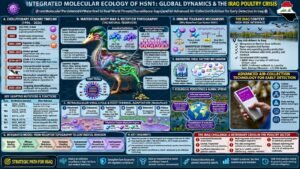
The molecular and ecological analysis of the highly pathogenic avian influenza (HPAI) H5N1 virus—as illustrated in the accompanying scientific image—reveals a complex epidemiological threat. This threat extends beyond conventional infection dynamics, serving as a rigorous test of the efficacy of biosafety systems and veterinary governance. The virus’s ability to persist within certain wild hosts, its genetic diversity, its interaction with cellular receptors and immune responses, and the movement of migratory birds collectively render H5N1 a transboundary threat that demands proactive, multi-layered surveillance systems. This reality is of particular significance in Iraq, where marshes, water bodies, and migratory bird flyways intersect with agricultural and poultry production zones—creating potential pathways for environmental exposure and the transmission of pathogens.
The core crisis facing Iraq’s poultry sector lies not merely in the potential introduction of the virus, but in the fragility of existing preventive barriers, the inconsistent application of biosafety measures, structural challenges within veterinary oversight, and a scarcity of published epidemiological data—data that would otherwise allow for an assessment of the effectiveness of early detection and response mechanisms. The H5N1 outbreak recorded in Bashiqa, Nineveh Governorate, in 2025 confirmed that the risk is not merely hypothetical, but a tangible threat to livestock production and food security. However, the existence of diagnostic and response capabilities for certain outbreaks does not necessarily imply the presence of a comprehensive national system with sufficient coverage across all levels of production.
A “veterinary governance crisis” emerges here as a strategic challenge, necessitating an independent assessment of the effectiveness of legislation, field inspections, compliance with World Organisation for Animal Health (WOAH) standards, and the efficiency of institutional coordination. Furthermore, the gap in epidemiological surveillance and early detection is a source of grave concern; relying on the appearance of clinical symptoms or animal mortality can lead to delayed detection, while a lack of available data hinders the ability to assess risks and prioritize interventions.
In this context, I have sought to introduce advanced air-collection technology into Iraq, aiming to shift the paradigm of veterinary surveillance from reactive disease response to proactive bio-surveillance. This technology enables the collection of air samples from production environments, which can then be analyzed in a laboratory to detect molecular markers of pathogens—thereby providing additional data to support early warning systems in Iraq’s poultry farms.
The true challenge lies not in the global availability of such technology, but in the capacity of Iraqi institutions to evaluate scientific innovation, integrate it, and transform it into practical, actionable surveillance tools. Introducing advanced equipment without developing laboratories, databases, training, and response procedures will not achieve a sustainable transformation.